


Role of Mitochondria in ME/CFS – A Systems Approach
In his presentation at the 2025 IACFS/ME Conference, Dr. Sundeep Dugar, pharma drug hunter and co-founder at BlueOakNx, revealed how decades of mitochondrial research may address a challenging paradox in Chronic Fatigue Syndrome (ME/CFS): people suffering from ME/CFS need exercise to improve mitochondrial function, but the exercise itself triggers debilitating Post-Exertional Malaise (PEM).
This tiredness factor triggers lifestyle changes in even the most resilient.
Chronic Fatigue - A Global Health Issue
Myalgic Encephalomyelitis / Chronic Fatigue Syndrome (ME/CFS) is a very complex and debilitating illness characterized by profound fatigue that does not improve with rest. There is no known cure or single diagnostic test, making management focused on symptom relief.
The global prevalence of general fatigue among adults is calculated at:
- Lasting <6 months is estimated at 20.4%
- Lasting >6 months is estimated 10.1%
It is to be noted that women are more often diagnosed than men.
Hallmark Symptoms of ME/CFS
People suffering from ME/ CFS experience a wide range of symptoms including:
- Exercise intolerance and slow recovery from fatigue after physical exertion
- Impaired mitochondrial function, slow regeneration of ATP, slow oxidative metabolism, and increased oxidative stress in muscle
- Consequences of dysfunctional mitochondria can also limit function of virtually every system in the body:
○ Brain with diminished memory, concentration, and coordination
○ Autonomic dysfunction
○ Negative impact on immunoglobulins, cytokines, chronic low-grade inflammation, reduction in autoimmunity, increase in neuroinflammation, and sub-optimal gut microbiome changes
○ T-cell abnormality
○ Poor modulation of immune responses by release of mtDNA into the cytosol
○ Post-Exertional Malaise (PEM), a key symptom of ME/CFS with neuroimmune features, could be mediated in part by the mitochondrial innate immune signaling mechanism involved in skeletal muscle adaptation to exercise
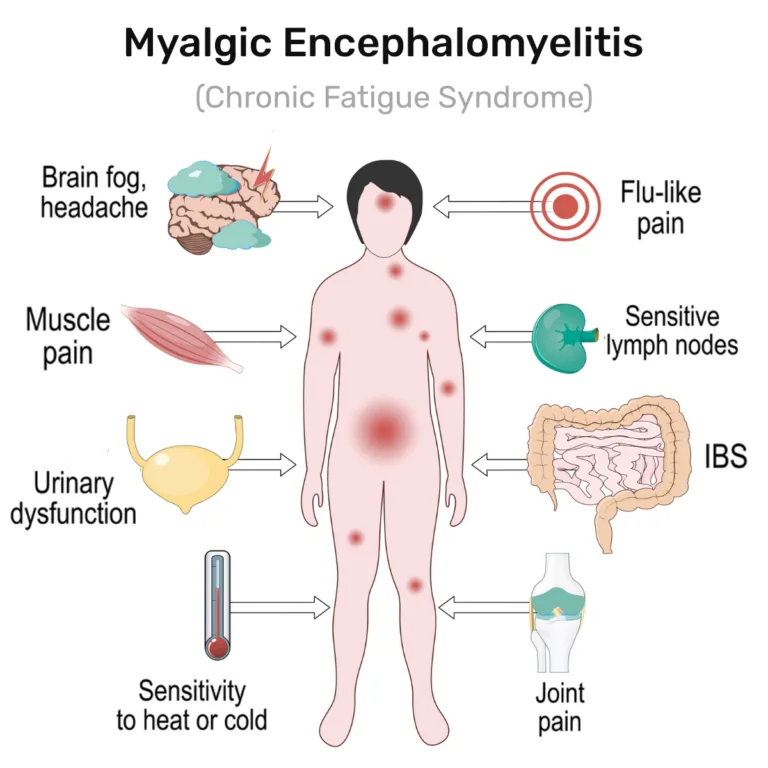
The diagram below shows some of the organs impacted and symptoms experienced.
Potential Triggers and Causes of ME/CFS
Researchers and clinicians have established many triggers and causes of this debilitating condition:
- Infection: Many cases begin after an infection with an abnormal immune response that may be a trigger that leads to a state of chronic inflammation.
- Immune system overreaction: The condition can be seen as a neuroinflammatory disease where the immune system has an abnormal and prolonged response.
Exercise and ME/CFS – A Conundrum
Exercise can be harmful for people with ME/CFS, as it can worsen symptoms and lead to a debilitating crash due to the following reasons:
- Post-Exertional Malaise (PEM)
- Drop in blood oxygen levels and heart rate
Those suffering with ME/CFS face an impossible challenge: they need the benefits of exercise but cannot exercise without triggering PEM, and potentially causing further damage.
“How do you calibrate your exercise that could be beneficial without tipping over into PEM?” Dr. Dugar asked. For most, even gentle activity can unexpectedly trigger a crash.
Watch Dr. Dugar’s presentation to learn more about an exercise memetic that could provide exercise’s cellular signals, without physical exertion, and could help rebuild mitochondrial capacity. As mitochondrial function improves, baseline cellular energy increases, potentially reducing PEM susceptibility, and creating a positive upward cycle instead of the current negative spiral.
Read / Watch More
- Watch to learn Mitochondria and the Emergence of the Science of Salugenesis
- Read more on A Conversation on Immune Disorders and Chronic Inflammation
- Read more about Mitochondria and the Role of a New Steroid