


How Air Pollution Causes Mitochondria Damage
Air pollution is receiving increasingly more attention due to its effects on cardiovascular health. In a 2023 study, short‐term exposure to air pollution was associated with higher risk of out‐of‐hospital sudden heart failure, even at levels below regulatory standards.
Multiple comprehensive reviews provide evidence that 45-50% of fatalities due to cardiovascular disease is attributable to air pollution, especially for stroke and ischemic heart disease. Furthermore, studies suggest that the elderly or people with underlying medical issues may be more vulnerable to cardiovascular complications when they have been exposed to short-term air pollution.
In this article, we present research on the connection between pollution and mitochondria.
Role of Mitochondrial Damage in Disease
Mitochondria are crucial organelles in the cell, providing the majority of the energy that the cell requires to function. As they are also responsible for managing balanced and stress conditions by forming the mitochondrial information processing systems (MIPS), which makes them sensitive indicators for various cellular and environmental stress. This makes them common targets for pollutants.
Excessive stress on mitochondria, caused by harmful exposures, including air pollutants, can lead to mitochondrial damage.
Mitochondrial damage has previously been found to play a role in various diseases, such as heart failure, neurodegenerative diseases, and even cancer. In addition, it is clear that lifestyle choices directly determine many diseases caused by mitochondrial dysfunction.
Impact of Atmospheric Particulate Matter on Mitochondria
It is becoming increasingly clear that mitochondria may also be affected by air pollutants, such as gases, pesticides, or microparticles. Building on this, scientists are now exploring how pollution might interfere with mitochondrial function, and whether this could help explain pollution-related diseases.
Studies have shown that air pollution – particularly Particulate Matter (PM) – can directly damage mitochondria and as a result disrupt their function. In particular, fine particulate matter (PM2.5), referring to particulate matter with an aerodynamic diameter ≤ 2.5µm, can contain various toxic substances such as heavy metals, Polycyclic Aromatic Hydrocarbons (PAHs).
Below is a microscopic view of dust particles captured by an air filter.
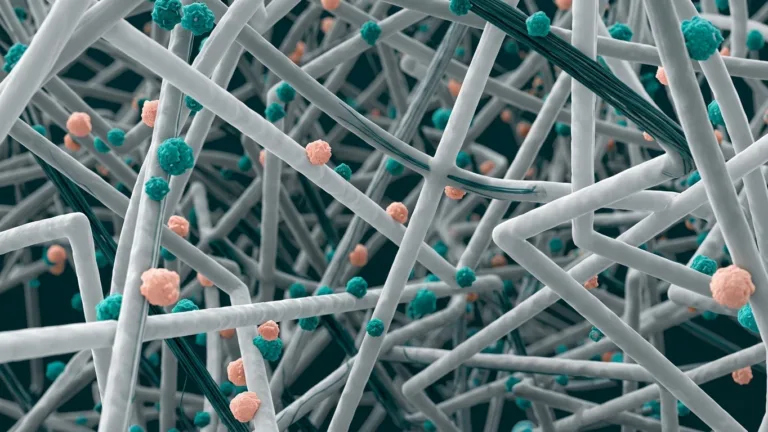
These particles can remain suspended in the atmosphere for extended periods and be transported over considerable distances. They are have been shown to impact mitochondria by:
- Inducing oxidative stress, which can impair mitochondrial function, reducing respiratory capacity and energy production as well as disrupting various other mitochondrial processes.
- Altering the mitochondrial DNA, potentially leading to long-term changes in mitochondrial function.
- Penetrating deep into the respiratory tract upon inhalation and induce mitochondrial dysfunction that underlie multi-organ toxicity, mainly in the respiratory system but also in the cardiovascular, nervous and reproductive systems among others.
Consistent with this, populations exposed to higher pollution levels display higher rates of mitochondrial DNA mutations. Thus, mitochondrial damage could be a critical step underlying the diverse toxic effects caused by atmospheric PM2.5.
Mechanisms of Mitochondrial Damage by Environmental Pollutants
Studies have found that the toxic effects of environmental pollution causes damage to the mitochondria on multiple levels, notably by:
- Opening of the mitochondrial permeability transition pore (mPTP)
- Disruption of mitochondrial dynamics and balance, damage to mtDNA and reduced mtDNA copy number, and impairment of the mitochondrial respiratory chain system
Dysfunction of these processes can impair the electron transport chain, responsible for producing energy for the cell, and lead directly to disrupted energy production, increased reactive oxygen species (ROS) generation and further damage, ultimately resulting in cell death.
The mPTP is located in the inner mitochondrial membrane and serves multiple regulatory and receptor functions. Under normal conditions, it remains closed to maintain the electrochemical gradient required for energy production. Under exposure to environmental pollutants, such as microplastics, PM2.5, and polycyclic aromatic hydrocarbons, can trigger mPTP opening pathways. Continuous exposure to PM2.5 at concentrations between 50-100mg/L has been shown to induce this, leading to mitochondrial swelling, structural damage, and impaired energy metabolism.
Similarly, exposure to 30-100 mg/L of microplastics and 20-100 mg/L of polycyclic aromatic hydrocarbons over 12 hours can reduce the ability of the cells to remove ROS, which reduces the cell’s antioxidant capacity and interrupts normal mitochondrial energy production.
These changes cause:
- Oxidative stress
- ATP depletion
- Activation of cell death pathways
The image below shows how environmental pollutants affect the mitochondrial permeability transition pore opening pathways.
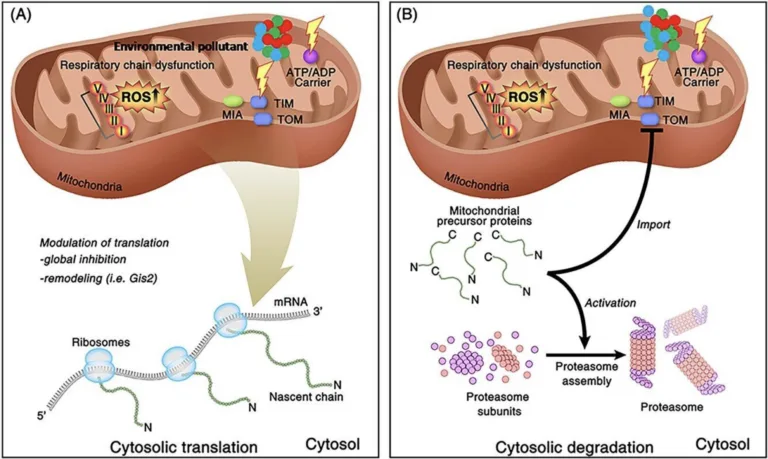
Image Credit: Li K, Geng Y, Lin B, Xi Z. Molecular mechanisms underlying mitochondrial damage, endoplasmic reticulum stress, and oxidative stress induced by environmental pollutants. Toxicol Res (Camb). 2023 Oct 19;12(6):1014-1023. doi: 10.1093/toxres/tfad094. PMID: 38145103; PMCID: PMC10734609.
Mitochondria are highly dynamic, constantly changing shape, and form complex interconnected networks within the cell. There are two main processes through which the mitochondrial fragments can reach a state of equilibrium by constantly merging and dividing.
- Fusion is when two mitochondria join together to share their contents. This helps dilute the damage in mitochondria, as the healthy mitochondria share healthy mtDNA or enzymes with the damaged mitochondria.
- Fission is when a mitochondrion splits into two smaller ones, allowing the cell to remove damaged parts.
Several key mitochondrial proteins play an essential role in these processes to reach equilibrium. When environmental pollutants disrupt this balance between fusion and fission, mitochondria lose their ability to maintain structural integrity and repair damage efficiently. As a result, they become more susceptible to oxidative stress and functional decline.
Mitochondrial Damage Affects the Immune System
Mitochondria are also essential in regulating immune responses. When they are damaged by pollutants, this can trigger inflammation and alter how the immune system reacts.
As previously mentioned, particulate matter such as PM2.5 can impair mitochondrial processes including redox balance, fission-fusion dynamics, cell death system, and overall metabolism. Owing to this, mitochondria produce less energy, which immune cells rely on to function. When this happens, immune cells such as macrophages, neutrophils, and T-cells cannot function properly, which can weaken the body’s ability to fight infection, or cause excessive inflammation.
Furthermore, when mitochondria are severely damaged, they release their DNA into the cytosol or outside the cell. This signals the cell of danger and the body mistakes it for foreign material as mitochondrial DNA resembles bacterial DNA.
It activates several immune sensors such as cGAS-STING, TLR9, and NLRP3, which in return trigger inflammatory cascades and cytokine release. This process, while protective in small amounts, can cause chronic inflammation when it happens repeatedly and can contribute to pollution-induced immunotoxicity.
The following image is an overview of the pro‐inflammatory signalling pathways engaged by mitochondrial DNA.

Health Consequences of Inhaled Pollution-Induced Mitochondrial Dysfunction
With inhaled pollutants, the lungs are the first organs exposed. Fine particles can penetrate deep into the respiratory tract, triggering oxidative stress and inflammation and causing injury to airway cells. Damaged mitochondria in these tissues further amplify the injury by leading to chronic inflammation, tissue remodeling, and increased susceptibility to respiratory diseases.
Air pollution is now also recognised as a risk factor for neurodegenerative conditions, such as Alzheimer’s and Parkinson’s disease. Pollutants, unlike most substances, can often cross the blood-brain barrier which is responsible for protecting the brain from potential damage, inducing mitochondrial dysfunction in neurons and glial cells, which support the neurons. This leads to energy deficits in brain cells, accumulation of free radicals, and alters how DNA is regulated, which together promote neuroinflammation and damage nerve cells.
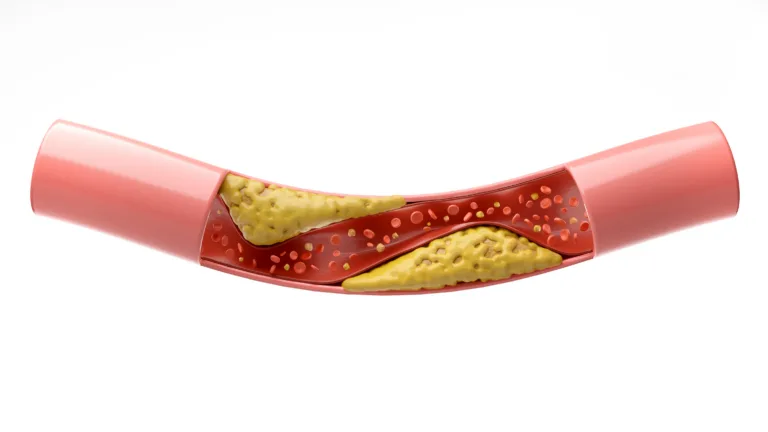
Pollution-induced mitochondrial damage in heart tissue and blood vessels contribute to high blood pressure, atherosclerosis, and heart failure. When mitochondria in heart cells fail to meet energy demands, oxidative stress and inflammation rise, impairing heart function and leading to an increased number of unstable hoards of cholesterol build-up in arteries.
Mitochondrial damage caused by pollution has also been linked to increased risk of diabetes, cancer, and certain types of autoimmune diseases. Several interconnected processes can explain how air pollution can cause such systemic damage:
- Chronic exposure to pollutants maintains chronic inflammation that damages mitochondria, while damaged mitochondria further exacerbates inflammatory signaling leading to a cycle that feeds on itself.
- Neuroinflammation in the brain can lead to neuronal damage and mitochondrial dysfunction.
- DNA methylation patterns affect the way DNA is regulated, and can be altered in case of mitochondrial damage, which then would lead to altered gene expression and function.
Mitochondrial Derived Peptides (MDPs) – produced by mitochondria – may offer protective mechanisms against the negative effects of pollution on mitochondria.
Mitochondria are Fundamental to Life
Mitochondria are essential to life because they are the primary source of cellular energy and are also the sensor sentinels of all living creatures.
They are responsible for converting nutrients into adenosine triphosphate (ATP), the energy unit that powers almost every biological function, including brain activity and muscle contraction. An estimated 3 × 10²⁵ ATP molecules are produced daily by the 1,000–2,500 mitochondria found in each human cell, which is roughly equal to an individual’s body weight. Since ATP cannot be stored, it must be produced continuously, so maintaining mitochondrial integrity is crucial for survival and good health.
It is noteworthy to mention that mitochondria are the only cellular components capable of self-replication, internal damage repair, and the elimination of malfunctioning copies. Cells can sustain energy balance even in the face of stress thanks to this self-renewal process.
They can be hampered by oxidative stress, poor diet, or long-term exposure to environmental contaminants, which lowers energy production and makes a person more susceptible to illness. The damage is offset by the ability to produce new mitochondria through mitochondrial biogenesis, and exercise is the only known physiological stimulus that activates this process.
Healthy lifestyle choices like consistent exercise, a healthy diet, and lowering oxidative stress can help restore mitochondrial balance and boost cellular resilience, despite environmental pollution that constantly contributes to impairing mitochondrial function.
Hence, maintaining mitochondrial health is essential for energy metabolism and serves as a major defense against the long-term negative health effects of pollution.
Read / Listen Next
- Learn about the Impact of Lifestyle & Aging Mitochondria on Longevity and Wellness.
- Read about the powerful role played by What is Inflammation and how Mitochondria combat Chronic Inflammation
- Watch a video featuring Robert Naviaux, MD, Ph.D. and Founder of the UCSD Mitochondrial and Metabolic Disease Center (MMDC) on Mitochondria and the emerging science of salugenesis
References
- Dahlquist M, Frykman V, Hollenberg J, Jonsson M, Stafoggia M, Wellenius GA, Ljungman PLS. Short-Term Ambient Air Pollution Exposure and Risk of Out-of-Hospital Cardiac Arrest in Sweden: A Nationwide Case-Crossover Study. J Am Heart Assoc. 2023 Nov 7;12(21):e030456. doi: 10.1161/JAHA.123.030456. Epub 2023 Oct 11. PMID: 37818697; PMCID: PMC10727387.
- de Bont J, Jaganathan S, Dahlquist M, Persson Å, Stafoggia M, Ljungman P. Ambient air pollution and cardiovascular diseases: An umbrella review of systematic reviews and meta-analyses. J Intern Med. 2022 Jun;291(6):779-800. doi: 10.1111/joim.13467. Epub 2022 Mar 8. PMID: 35138681; PMCID: PMC9310863.
- Kuo CL, Lin YC, Lo YK, Lu YZ, Babuharisankar AP, Lien HW, Chou HY, Lee AY. The mitochondrial stress signaling tunes immunity from a view of systemic tumor microenvironment and ecosystem. iScience. 2024 Aug 13;27(9):110710. doi: 10.1016/j.isci.2024.110710. PMID: 39262792; PMCID: PMC11388186.
- An Z, Liu G, Shen L, Qi Y, Hu Q, Song J, Li J, Du J, Bai Y, Wu W. Mitochondrial dysfunction induced by ambient fine particulate matter and potential mechanisms. Environ Res. 2024 Dec 1;262(Pt 2):119930. doi: 10.1016/j.envres.2024.119930. Epub 2024 Sep 3. PMID: 39237017.
- Wang M, Zhao J, Wang Y, Mao Y, Zhao X, Huang P, Liu Q, Ma Y, Yao Y, Yang Z, Yuan W, Cui W, Payne TJ, Li MD. Genome-wide DNA methylation analysis reveals significant impact of long-term ambient air pollution exposure on biological functions related to mitochondria and immune response. Environ Pollut. 2020 Sep;264:114707. doi: 10.1016/j.envpol.2020.114707. Epub 2020 May 1. PMID: 32388307.
- Casanova A, Wevers A, Navarro-Ledesma S, Pruimboom L. Mitochondria: It is all about energy. Front Physiol. 2023 Apr 25;14:1114231. doi: 10.3389/fphys.2023.1114231. PMID: 37179826; PMCID: PMC10167337.
- Neikirk K, Harris C, Le H, Oliver A, Shao B, Liu K, Beasley HK, Jamison S, Ishimwe JA, Kirabo A, Hinton A Jr. Air pollutants as modulators of mitochondrial quality control in cardiovascular disease. Physiol Rep. 2024 Nov;12(22):e70118. doi: 10.14814/phy2.70118. PMID: 39562150; PMCID: PMC11576129.
- Chew S, Lampinen R, Saveleva L, Korhonen P, Mikhailov N, Grubman A, Polo JM, Wilson T, Komppula M, Rönkkö T, Gu C, Mackay-Sim A, Malm T, White AR, Jalava P, Kanninen KM. Urban air particulate matter induces mitochondrial dysfunction in human olfactory mucosal cells. Part Fibre Toxicol. 2020 Jun 1;17(1):18. doi: 10.1186/s12989-020-00352-4. PMID: 32487172; PMCID: PMC7268298.
- Prakash YS, Pabelick CM, Sieck GC. Mitochondrial Dysfunction in Airway Disease. Chest. 2017 Sep;152(3):618-626. doi: 10.1016/j.chest.2017.03.020. Epub 2017 Mar 21. PMID: 28336486; PMCID: PMC5812762.
- Ku T, Ji X, Zhang Y, Li G, Sang N. PM2.5, SO2 and NO2 co-exposure impairs neurobehavior and induces mitochondrial injuries in the mouse brain. Chemosphere. 2016 Nov;163:27-34. doi: 10.1016/j.chemosphere.2016.08.009. Epub 2016 Aug 10. PMID: 27521637.
- Shi F, Zhang Z, Wang J, Wang Y, Deng J, Zeng Y, Zou P, Ling X, Han F, Liu J, Ao L, Cao J. Analysis by Metabolomics and Transcriptomics for the Energy Metabolism Disorder and the Aryl Hydrocarbon Receptor Activation in Male Reproduction of Mice and GC-2spd Cells Exposed to PM2.5. Front Endocrinol (Lausanne). 2022 Jan 3;12:807374. doi: 10.3389/fendo.2021.807374. PMID: 35046903; PMCID: PMC8761788.
- Liu, ., Ai, Y., Xiao, M. et al. PM 2.5 juvenile exposure–induced spermatogenesis dysfunction by triggering testes ferroptosis and antioxidative vitamins intervention in adult male rats. Environ Sci Pollut Res 30, 111051–111061 (2023). https://doi.org/10.1007/s11356-023-30150-2
- Brunst KJ, Hsu HL, Zhang L, Zhang X, Carroll KN, Just A, Coull BA, Kloog I, Wright RO, Baccarelli AA, Wright RJ. Prenatal particulate matter exposure and mitochondrial mutational load at the maternal-fetal interface: Effect modification by genetic ancestry. Mitochondrion. 2022 Jan;62:102-110. doi: 10.1016/j.mito.2021.11.003. Epub 2021 Nov 14. PMID: 34785263; PMCID: PMC9175302.
- Winckelmans E, Nawrot TS, Tsamou M, Den Hond E, Baeyens W, Kleinjans J, Lefebvre W, Van Larebeke N, Peusens M, Plusquin M, Reynders H, Schoeters G, Vanpoucke C, de Kok TM, Vrijens K. Transcriptome-wide analyses indicate mitochondrial responses to particulate air pollution exposure. Environ Health. 2017 Aug 18;16(1):87. doi: 10.1186/s12940-017-0292-7. PMID: 28821289; PMCID: PMC5563023.
- Reddam A, McLarnan S, Kupsco A. Environmental Chemical Exposures and Mitochondrial Dysfunction: a Review of Recent Literature. Curr Environ Health Rep. 2022 Dec;9(4):631-649. doi: 10.1007/s40572-022-00371-7. Epub 2022 Jul 28. PMID: 35902457; PMCID: PMC9729331.
- Li K, Geng Y, Lin B, Xi Z. Molecular mechanisms underlying mitochondrial damage, endoplasmic reticulum stress, and oxidative stress induced by environmental pollutants. Toxicol Res (Camb). 2023 Oct 19;12(6):1014-1023. doi: 10.1093/toxres/tfad094. PMID: 38145103; PMCID: PMC10734609.
- Liang Y, Chu PH, Tian L, Ho KF, Ip MSM, Mak JCW. Targeting mitochondrial permeability transition pore ameliorates PM2.5-induced mitochondrial dysfunction in airway epithelial cells. Environ Pollut. 2022 Feb 15;295:118720. doi: 10.1016/j.envpol.2021.118720. Epub 2021 Dec 22. PMID: 34953947.
- Wang Y, Zhang M, Li Z, Yue J, Xu M, Zhang Y, Yung KKL, Li R. Fine particulate matter induces mitochondrial dysfunction and oxidative stress in human SH-SY5Y cells. Chemosphere. 2019 Mar;218:577-588. doi: 10.1016/j.chemosphere.2018.11.149. Epub 2018 Nov 23. PMID: 30502696.
- Mónica G. Silva, Maria Manuel Oliveira, Francisco Peixoto, Assessing micro and nanoplastics toxicity using rodent models: Investigating potential mitochondrial implications,Toxicology, Volume 499, 2023, 153656, ISSN 0300-483X, https://doi.org/10.1016/j.tox.2023.153656.
- Chan DC. Mitochondrial Dynamics and Its Involvement in Disease. Annu Rev Pathol. 2020 Jan 24;15:235-259. doi: 10.1146/annurev-pathmechdis-012419-032711. Epub 2019 Oct 4. PMID: 31585519.
- Tilokani L, Nagashima S, Paupe V, Prudent J. Mitochondrial dynamics: overview of molecular mechanisms. Essays Biochem. 2018 Jul 20;62(3):341-360. doi: 10.1042/EBC20170104. PMID: 30030364; PMCID: PMC6056715.
- Youle RJ, van der Bliek AM. Mitochondrial fission, fusion, and stress. Science. 2012 Aug 31;337(6098):1062-5. doi: 10.1126/science.1219855. PMID: 22936770; PMCID: PMC4762028.
- Chen H, Chan DC. Emerging functions of mammalian mitochondrial fusion and fission. Hum Mol Genet. 2005 Oct 15;14 Spec No. 2:R283-9. doi: 10.1093/hmg/ddi270. PMID: 16244327.
- Liu X, Weaver D, Shirihai O, Hajnóczky G. Mitochondrial ‘kiss-and-run’: interplay between mitochondrial motility and fusion-fission dynamics. EMBO J. 2009 Oct 21;28(20):3074-89. doi: 10.1038/emboj.2009.255. Epub 2009 Sep 10. PMID: 19745815; PMCID: PMC2771091.
- Santel A, Fuller MT. Control of mitochondrial morphology by a human mitofusin. J Cell Sci. 2001 Mar;114(Pt 5):867-74. doi: 10.1242/jcs.114.5.867. PMID: 11181170.
- West, A., Shadel, G. & Ghosh, S. Mitochondria in innate immune responses. Nat Rev Immunol 11, 389–402 (2011). https://doi.org/10.1038/nri2975
- Kim JH, Hwang KH, Kim SH, Kim HJ, Kim JM, Lee MY, Cha SK, Lee J. Particulate Matter-Induced Neurotoxicity: Unveiling the Role of NOX4-Mediated ROS Production and Mitochondrial Dysfunction in Neuronal Apoptosis. Int J Mol Sci. 2024 Jun 1;25(11):6116. doi: 10.3390/ijms25116116. PMID: 38892302; PMCID: PMC11172693.
- Sharma J, Parsai K, Raghuwanshi P, Ali SA, Tiwari V, Bhargava A, Mishra PK. Emerging role of mitochondria in airborne particulate matter-induced immunotoxicity. Environ Pollut. 2021 Feb 1;270:116242. doi: 10.1016/j.envpol.2020.116242. Epub 2020 Dec 9. PMID: 33321436.
- Riley JS, Tait SW. Mitochondrial DNA in inflammation and immunity. EMBO Rep. 2020 Apr 3;21(4):e49799. doi: 10.15252/embr.201949799. Epub 2020 Mar 23. PMID: 32202065; PMCID: PMC7132203.
- Zhai X, Wang J, Sun J, Xin L. PM2.5 induces inflammatory responses via oxidative stress-mediated mitophagy in human bronchial epithelial cells. Toxicol Res (Camb). 2022 Jan 19;11(1):195-205. doi: 10.1093/toxres/tfac001. PMID: 35237424; PMCID: PMC8882786.
- Moulton PV, Yang W. Air pollution, oxidative stress, and Alzheimer’s disease. J Environ Public Health. 2012;2012:472751. doi: 10.1155/2012/472751. Epub 2012 Mar 15. PMID: 22523504; PMCID: PMC3317180.
- Block ML, Calderón-Garcidueñas L. Air pollution: mechanisms of neuroinflammation and CNS disease. Trends Neurosci. 2009 Sep;32(9):506-16. doi: 10.1016/j.tins.2009.05.009. Epub 2009 Aug 26. PMID: 19716187; PMCID: PMC2743793.
- Hahad O, Wojciechowska W, Kuntic M, Pozzer A, Grassos C, Rajzer M. Air pollution and hypertension: Mechanistic and epidemiological insights. Kardiol Pol. 2025;83(5):546-555. doi: 10.33963/v.phj.105320. Epub 2025 Apr 3. PMID: 40178248.
- Zuo M, Ye M, Lin H, Liao S, Xing X, Liu J, Wu D, Huang Z, Ren X. Mitochondrial Dysfunction in Environmental Toxicology: Mechanisms, Impacts, and Health Implications. Chem Res Toxicol. 2024 Nov 18;37(11):1794-1806. doi: 10.1021/acs.chemrestox.4c00328. Epub 2024 Nov 1. PMID: 39485318.
- Lin CH, Nicol CJB, Wan C, Chen SJ, Huang RN, Chiang MC. Exposure to PM2.5 induces neurotoxicity, mitochondrial dysfunction, oxidative stress and inflammation in human SH-SY5Y neuronal cells. Neurotoxicology. 2022 Jan;88:25-35. doi: 10.1016/j.neuro.2021.10.009. Epub 2021 Oct 27. PMID: 34718062.
- Byun HM, Colicino E, Trevisi L, Fan T, Christiani DC, Baccarelli AA. Effects of Air Pollution and Blood Mitochondrial DNA Methylation on Markers of Heart Rate Variability. J Am Heart Assoc. 2016 Apr 22;5(4):e003218. doi: 10.1161/JAHA.116.003218. PMID: 27107129; PMCID: PMC4843532.
- Kim SJ, Xiao J, Wan J, Cohen P, Yen K. Mitochondrially derived peptides as novel regulators of metabolism. J Physiol. 2017 Nov 1;595(21):6613-6621. doi: 10.1113/JP274472. Epub 2017 Jul 18. PMID: 28574175; PMCID: PMC5663826.