


The Role of Mitochondria and Bioenergetics in the Skeletal and Cardiac Muscles of Becker Muscular Dystrophy – Overview by Sundeep Dugar, PhD
In this overview of the peer-reviewed published Becker Muscular Dystrophy (BMD) study, Sundeep Dugar, PhD, a pharmaceutical chemist and inventor and co-founder at BlueOakNx, Inc., describes the role of mitochondria in skeletal muscle compensation and cardiac muscle signaling for abnormalities present in the degenerative condition. The eight-week, open-label study was conducted at the University of California at Davis, led by Craig M. McDonald, principal investigator.
BMD, one of nine types of muscular dystrophies, is a genetic variance passed from carrier mothers to their male offspring. It typically affects muscles of the hips, thighs, shoulders, and the heart, and has mild or later onset compared to others. (The 9 types of dystrophies include Duchenne [DMD], Becker [BMD], Myotonic [DM], Limb-Girdle [LGMD], Facioscapulohumeral [FSHD], Congenital [CMD], Distal [DD], Oculopharyngeal [OPMD], and Emery-Dreifuss [EDMD])
Sundeep Dugar, PhD, describes in detail the mitochondria as the primary producers of energy and sentinels of the cell, converting nutrients into adenosine triphosphate (ATP), via phosphorylation (image below), to sustain the basis of all cellular activity, healing, repair, and regeneration in both healthy and disease conditions.
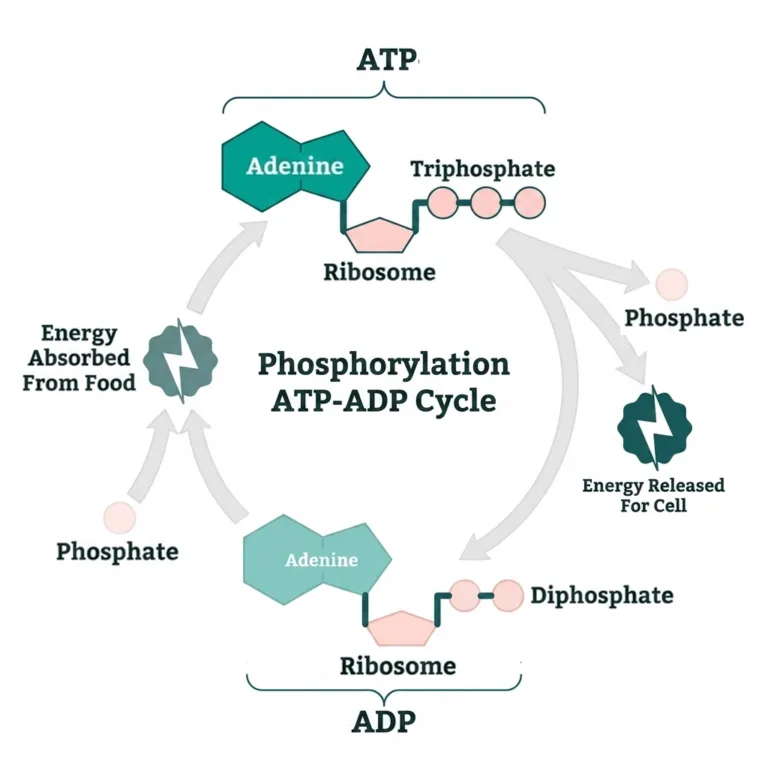
Bioenergetics examines the capacity of cells to generate and manage ATP through mitochondrial function and the interplay between the microbiome and cellular energy systems. This perspective shifts traditional care from disease management to health optimization by addressing the root cause of cellular dysfunction. This opens possibilities in managing the progression of BMD.
Go straight to the study and science by watching this replay or read on for more:
The Mitochondria & Biogenesis System
Besides their role as sentinels of the cells, the mitochondria play the key role of continuously cycling energy to all biological functions, day and night. They are the only organelles capable of replicating, repairing, and eliminating themselves making them adaptive to cell function. Biogenesis is triggered by both internal triggers, such as, cell division or metabolic demand, and external triggers. such as, exercise or physical demand.
In BMD, the lack of dystrophin, a stabilizing protein in skeletal muscle, causes the mitochondria to work harder to provide the same energy function as healthy muscles. This sets off a cascade production of more reactive oxygen species (ROS), causing more damage, which requires more work. Because mitochondria are in every cell, this degenerative signal extends to the downstream biological pathway affecting the heart, metabolic function, and vascular health.
(-)-Epicatechin as an Exercise Mimetic
It is well established that exercise and nutrition are primary triggers to activate mitochondrial biogenesis, overcoming damage and depletion. Yet, in BMD, exercise is contraindicated, and can actually accelerate muscle damage. The study indicated that because the mitochondria in BMD patients are not genetically abnormal, just overworked, then perhaps an intervention is appropriate.
The study introduced a stereoisomer called (-)-epicatechin that activates cellular signaling pathways involved in mitochondrial biogenesis. Research suggests it activates similar pathways to exercise, including AMPK, PGC-1a, and Nrf2 signaling. This increase in protein expression in muscle tissue contributes to slow, or potentially reverse, myopathy.
A Breakthrough in Mitochondrial Function Biomarkers
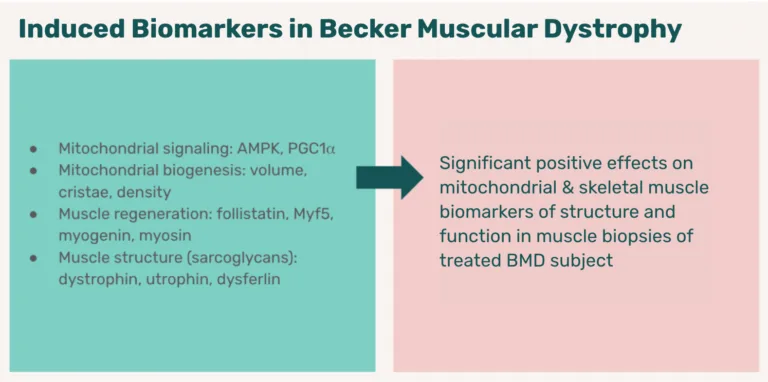
The design included primary endpoints focused on tissue-specific biomarkers from muscle biopsies, while secondary endpoints measured functional capacity and safety. The data reported statistically significant increases of mitochondrial transcription factors along with elevated markers of muscle regeneration summarized in the image below.
Electron microscopy also showed a doubling of mitochondrial volume along with increased cristae density, suggesting improved ATP synthesis per mitochondrion. See the image in the following section.
Protein Levels and Muscle Regeneration
In the baseline of the trial, subjects showed a severe loss of mitochondria cristae and significantly reduced levels of dystrophin.
At eight weeks into the study, muscle biopsy results showed an increase in three areas of the mitochondria:
- An increase in the transcriptional coactivators of genes involved in mitochondrial biogenesis
- An increase in the levels of mitofilin, a protein that controls and maintains mitochondrial cristae
- An increase in cristae, which orchestrates cellular energy production
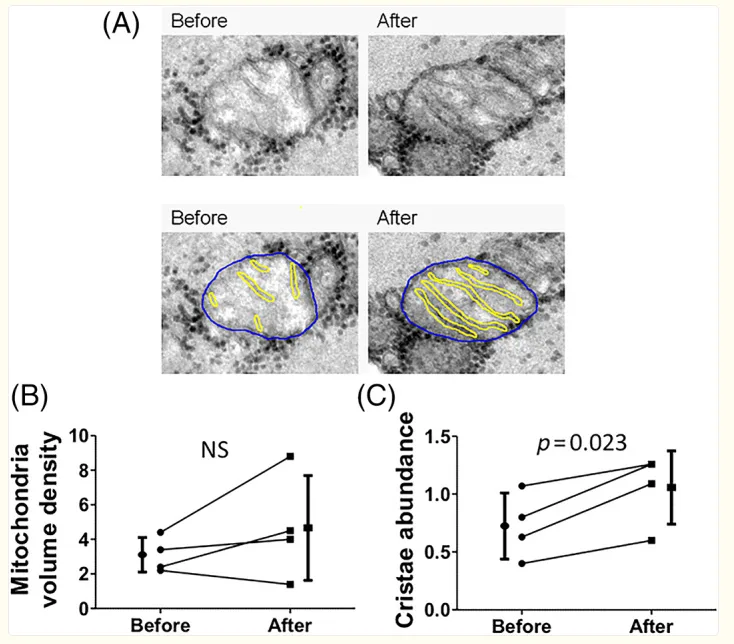
Fig. 2. Immunofluorescence staining of proteins regulating mitochondrial biogenesis and cristae structure. From Schreiner, Villarreal, and McDonald 2021, 278. Licensed under CC BY-NC-ND 4.0.
It also demonstrated three key results for muscle:
- Elevated markers of muscle regeneration such as follistatin, myogenin, and MyoD.
- Myostatin, a known inhibitor of muscle growth, showed a statistically significant decrease.
- A reduction of B-type natriuretic peptide (BNP), a biomarker of congestive heart disease, suggesting mitochondria function underlies both skeletal and cardiac muscle.
Sundeep Dugar, PhD, concludes that by framing these results as early evidence that mitochondrial activity may be a meaningful target in addressing the progression of BMD, that the study’s small size and open-label design are factors that warrant further investigation.
This content is for educational purposes only and is not medical advice. Consult a healthcare professional for guidance specific to your situation.
Read / Watch More
- Watch more about Improving Mitochondrial Function: From Neurodegeneration to Oncology UC Davis
- Read more about Mitochondrial Health and a Different Approach to Supplementation
- Read more about The Journey from Pharmaceuticals to Nutraceuticals
References
- McDonald CM, Ramirez-Sanchez I, Oskarsson B, Joyce N, Aguilar C, Nicorici A, Dayan J, Goude E, Abresch RT, Villarreal F, Ceballos G, Perkins G, Dugar S, Schreiner G, Henricson EK. (-)-Epicatechin induces mitochondrial biogenesis and markers of muscle regeneration in adults with Becker muscular dystrophy. Muscle Nerve. 2021 Feb;63(2):239-249. doi: 10.1002/mus.27108.
- Abrego-Guandique DM, Aguilera Rojas NM, Chiari A, Luciani F, Cione E, Cannataro R. The impact of exercise on mitochondrial biogenesis in skeletal muscle: A systematic review and meta-analysis of randomized trials. Biomol Concepts. 2025 May 30;16(1). doi: 10.1515/bmc-2025-0055. PMID: 40459444.