


Targeting the Root Cause: Dr. Robert Lustig on Mitochondrial Health and a Different Approach to Supplementation
In a recent episode of the Longevity Roadmap Podcast, host Dr. Buck Joffrey sat down with Dr. Robert Lustig, the renowned pediatric endocrinologist and professor emeritus from UCSF, for a deep dive into metabolic dysfunction, the silent epidemic affecting an astonishing 93% of Americans. While the conversation covered everything from the dangers of ultra-processed foods to the role of fructose in fatty liver disease, the most intriguing segment came in the final minutes when Dr. Lustig introduced a fundamentally different approach to addressing mitochondrial dysfunction.
The Mitochondrial Connection
Throughout the interview, Dr. Lustig emphasized that metabolic dysfunction ultimately comes down to one thing: defective mitochondria. These cellular powerhouses are responsible for converting food energy into ATP, the molecule that fuels every process in our bodies.
Dr. Lustig points to one of biology’s most staggering facts: every single day, your mitochondria manufacture your entire body weight in ATP from scratch. Across the American population, that’s roughly 68 billion pounds of cellular fuel produced and consumed before tomorrow’s sunrise. Not stored. Not borrowed. Synthesized anew, every second, by a hundred thousand trillion microscopic engines working in concert. When mitochondrial efficiency drops even from 100% to 99%, that seemingly small deficit manifests as obesity, diabetes, cardiovascular disease, cancer, and dementia.
The problem with most interventions, whether dietary changes or typical supplements, is that they struggle to actually reach the mitochondria where they’re needed most. As Lustig bluntly stated about conventional mitochondrial supplements, “Most of them don’t.” He called out a popular energy supplement, noting that despite sounding promising, it simply doesn’t get to where it needs to go, with studies confirming this limitation.
A Different Mechanism: Catalyzing vs. Boosting
This is where Dr. Lustig’s discussion took an interesting turn. Rather than talking about supplements that attempt to “boost” existing mitochondria (the typical approach that often fails), he introduced the concept of compounds that act as mitochondrial catalysts, potentially supporting mitochondrial biogenesis (the creation of new mitochondria) rather than just trying to prop up dysfunctional ones.
The distinction is crucial. It’s the difference between trying to get more performance out of a failing engine versus supporting the body’s natural ability to build new, functional engines.
Enter (-)-epicatechin
The compound at the center of this discussion is (-)-epicatechin, a polyphenol found naturally in green tea, dark chocolate, and guarana. What caught Dr. Lustig’s attention, and what distinguishes this from typical supplement hype, is the specific mechanism of action.
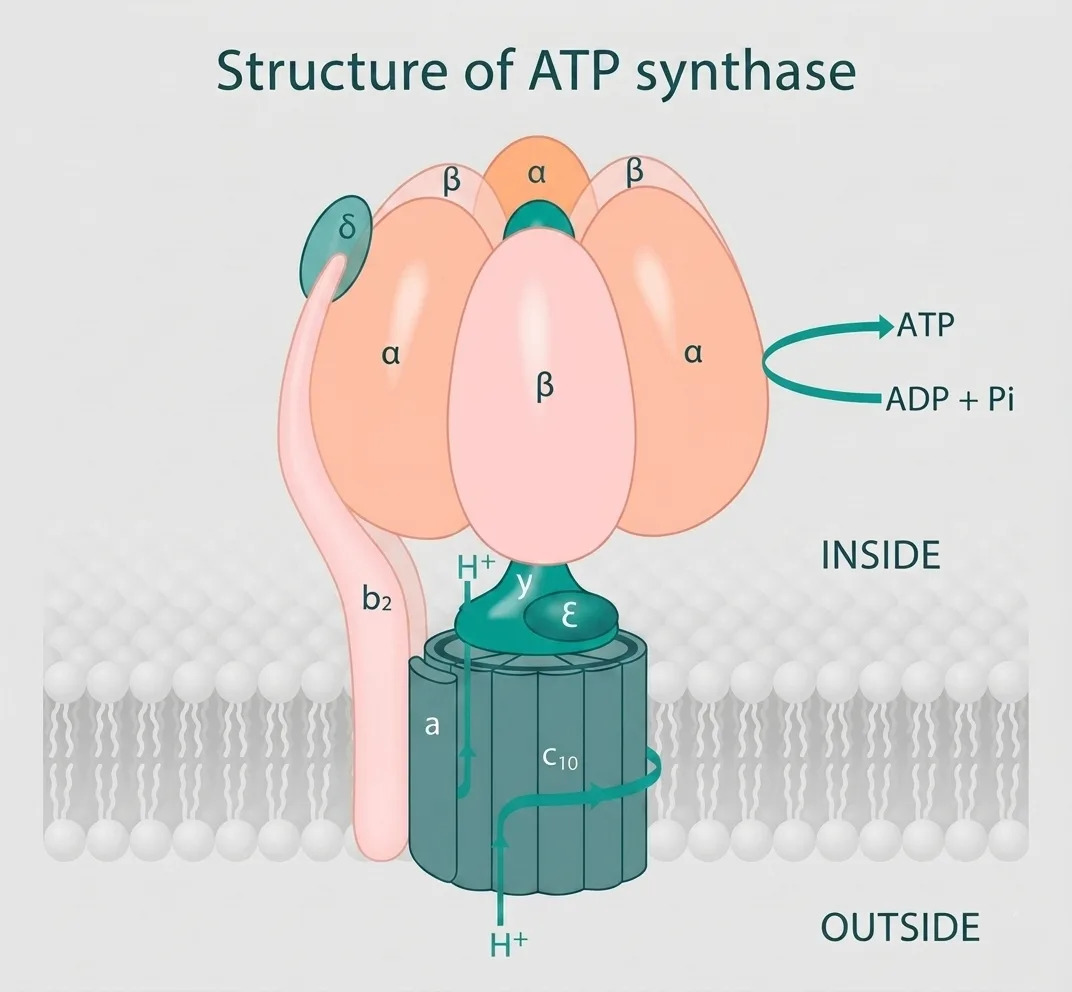
(-)-epicatechin binds to a protein called IF1, which then interacts with ATP synthase, the enzyme in complex V of the electron transport chain. Here’s where the science becomes fascinating: ATP synthase is a molecular motor that can spin in either direction. Spin it clockwise, and you’re synthesizing ATP (producing energy). Spin it counterclockwise, and you’re actually hydrolyzing ATP (consuming energy you’ve already made).
The body sometimes needs the counterclockwise spin, for instance during fever when you’re trying to generate heat rather than store energy. But for metabolic health, you want that enzyme predominantly spinning in the ATP-producing direction.
The (-)-epicatechin-IF1 interaction appears to influence this directionality, essentially helping ensure the enzyme operates in its energy-producing mode. View more about how All Epicatechins are Not Equal.
The Clinical Context
What lends credibility to this discussion is Dr. Lustig’s mention of Dr. Sundeep Dugar, a medicinal biochemist who spent 35 years in pharma before founding his own nutraceutical company. Dugar conducted three separate double-blind, placebo-controlled trials using epicatechin formulations in diabetes, heart disease, and Becker’s muscular dystrophy, all conditions rooted in mitochondrial dysfunction.
Dr. Lustig was transparent about his advisory relationship with the company, stating upfront: “Full disclosure, I am an advisor to this nutraceutical company. Take this, you know, with a grain of salt. I’m not selling.” While such disclosures always warrant healthy skepticism, Lustig’s reputation as a fierce critic of the food industry and his generally data-driven approach add context to his interest.
The Bigger Picture
What makes this segment particularly meaningful within the full interview is that Lustig spent the previous hour detailing all the ways modern processed food destroys mitochondrial function through excess sugar (particularly fructose), inadequate fiber, omega-3 deficiency, and inflammatory emulsifiers. The 73% of our food supply that’s ultra-processed is systematically undermining our cellular energy production.
His discussion of epicatechin wasn’t presented as a magic bullet that negates the need for dietary reform. Rather, it emerged as part of a larger conversation about addressing metabolic health on multiple fronts: eliminating ultra-processed foods, supporting gut health, reducing systemic inflammation, and potentially supporting mitochondrial function through targeted compounds that work differently than conventional supplements.
Final Thoughts
The Longevity Roadmap episode makes clear that improving metabolic health requires comprehensive action. The bulk of the conversation focused, appropriately, on avoiding the dietary landmines that create metabolic dysfunction in the first place.
But the closing discussion about epicatechin offered something worth considering: a scientifically-grounded approach that works at a fundamental cellular level, not by trying to boost failing mitochondria, but by potentially supporting the creation of new, functional ones. The concept of mitochondrial catalysis rather than simple supplementation represents a different paradigm in how we think about cellular energy production.
For those of us interested in longevity and metabolic health, it’s a reminder that the most powerful interventions often work at the most fundamental level, and that credible scientists like Dr. Lustig pay attention when the mechanism makes biological sense.
Listen to the full episode of this podcast
Read / Watch More
-
- Learn about the Role of Mitochondria in Metabolic Syndrome
- Read about Why Healthspan is more Important than Longevity