


Why Healthspan is more Important than Longevity
Medicine has improved spectacularly over the last century, bringing with it a higher life expectancy than was ever possible. In the United States, life expectancy at birth has risen from 47.3 to 78.7 years over a period of 110 years. A hundred years ago, life expectancy was short, often as a result of recent infection.
As the number of infections leading to death improved due to advances in prevention and treatment, the leading causes of death shifted to chronic conditions that develop over a long lifespan. This shift in human longevity has led to a disproportionate number of people over 70. Even with the current state of medicine, however, very few reach 100 years, as mortality increases exponentially at older age. Based on data from 2010, only about 1% of people survive to 100 years.
This article helps us understand the difference between living long versus having a good healthspan.
Longevity and Healthspan are Not the Same
Although people tend to live longer now, those extra years are not necessarily spent in good health. With an aging population, we see a higher proportion of chronic diseases and functional decline, such as in diabetes, stroke, heart disease, and cancer.
According to a 2018 paper from Partridge et al., roughly one-fifth of an individual’s life is lived with a health problem. Furthermore, chronic diseases are responsible for 71% of annual deaths and 79% of all years lived with a disability, creating an estimated socioeconomic burden of $47 trillion between 1990 and 2010.

While lifespan refers to the number of years a person has lived, healthspan represents the years spent free from disease and disability. Some diseases, such as cancer, are a major cause of death but do not always cause long-term disability, whereas others, like arthritis, osteoporosis, and cognitive decline, impair daily function without being an important cause of death.
There is, therefore, no one-to-one correspondence but in fact a gap between lifespan and healthspan, representing the years burdened by disease. It is estimated to take up around 9.6 years of an individual’s life. This gap is widest in many Western countries, including the US, Australia, New Zealand, Great Britain and Northern Ireland and Norway, and narrowest in regions such as Lesotho, Central African Republic, and Micronesia.
This gap tends to aggravate, particularly in women, if we increase the lifespan alone without also delaying disease onset or reducing disease severity. Understanding and targeting the biological processes that underlie aging is key to narrowing this divide.
One of the most important of these processes lies within every cell, inside the mitochondria.
Connection between Incomplete Healing Cycles and Aging
Different tissues age in different ways, but the body as a whole gradually loses its ability to recover from stress or illness. Communication between cells and organs becomes less efficient, slowing the body’s capability to heal after getting injured or under stress. The older we get, the more time recovery takes. From this perspective, aging can be seen as the accumulation of incomplete healing cycles, each one leaving behind subtle traces of dysfunction.
Many researchers, including Dr Robert Naviaux, propose that aging results not only from the passage of time or accumulated damage but also from these unresolved healing responses.
Significant Role of Mitochondria in Aging
Evidence does suggest that the etiology of aging is complex and caused by disruptions in multiple molecular pathways, it must be noted that the mitochondria play a significant role in this process. They regularly shift between different functional states depending on cellular needs, defending against stress, supporting repair, and providing the energy that sustains life.
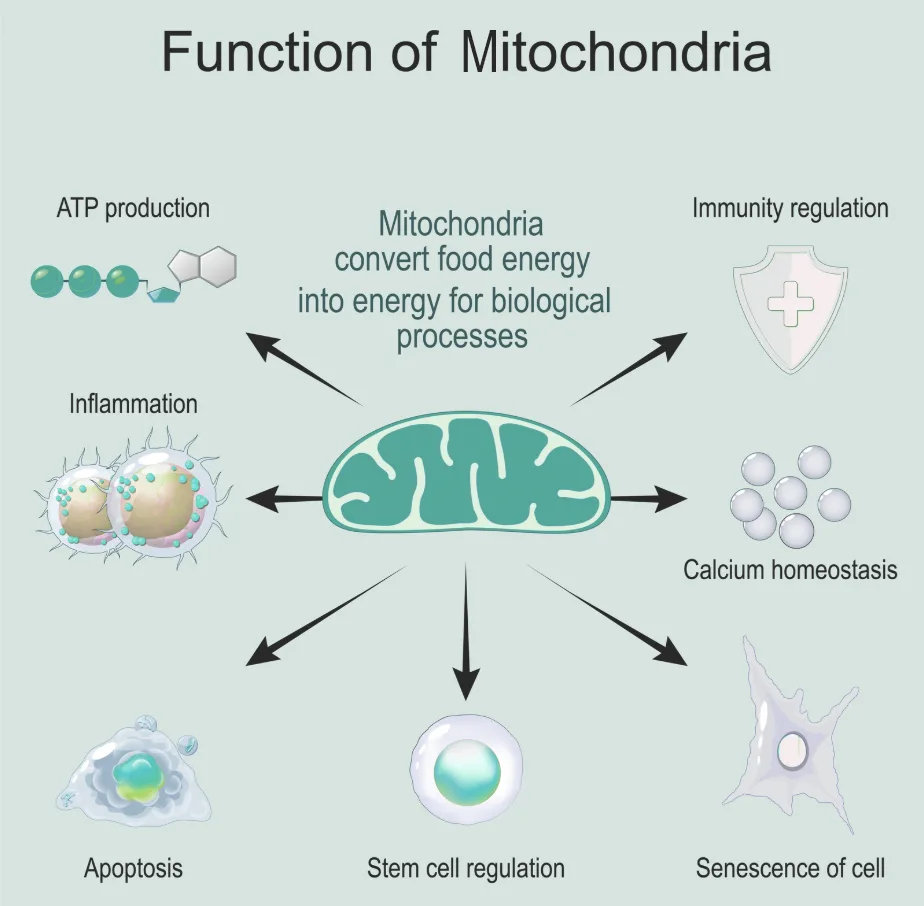
In their defensive state, mitochondria produce reactive oxygen species (ROS), which act both as byproducts and regulators of metabolism. In small amounts, ROS promote adaptation and build resilience, but in excess they damage proteins, lipids and DNA.
Normally, ROS generation is balanced by antioxidant defenses, yet with age, mitochondrial quality control mechanisms against ROS-induced damage weaken, and the scale tips in favor of ROS production.
This imbalance can open channels known as mitochondrial permeability transition pores. Brief pore openings are part of normal stress signaling; however, chronic or unregulated openings cause mitochondrial collapse and cell death. ROS can trigger these pores, and the resulting pore opening further amplifies ROS production, leading to a self-reinforcing loop that prevents the cell from returning to metabolic balance.
Despite this, oxidative stress alone cannot explain aging. Studies show that increased ROS does not always shorten lifespan and can even promote longevity under certain conditions. This suggests that mitochondria influence aging through more than just oxidative damage caused by ROS.
Aging and decreased lifespan are associated not only with ROS production and increased mitochondrial DNA damage but also with changes in fatty acid composition of mitochondrial membranes. This composition influences how easily membrane lipids become oxidized and can therefore act as a determinant of aging.
For example, species with very low levels of membrane polyunsaturated fatty acids, such as lizards, tend to live longer. This observation forms the basis of the membrane pacemaker hypothesis of metabolism, which proposes that higher levels of polyunsaturated fatty acids enhance metabolic rate but at the cost of increased susceptibility to oxidative damage.
Likewise, impaired synthesis of cardiolipin, a phospholipid found almost exclusively in mitochondrial membranes, has been linked to reduced longevity. In contrast, plasmenyl lipids, which are more abundant in long-lived species, may act as natural membrane antioxidants that help balance oxidative stress.
Because mitochondrial DNA is about ten times more vulnerable to mutation than nuclear DNA, mitochondria gradually lose their flexibility to shift between states with aging.
Aging is frequently associated with a shift in mitochondrial dynamics, where there’s a loss of ability to divide, leading to abnormally enlarged mitochondria. Meanwhile, the electron transport chain, the cell’s main energy system, slows down with aging, leading to reduced energy production and more ROS generation.
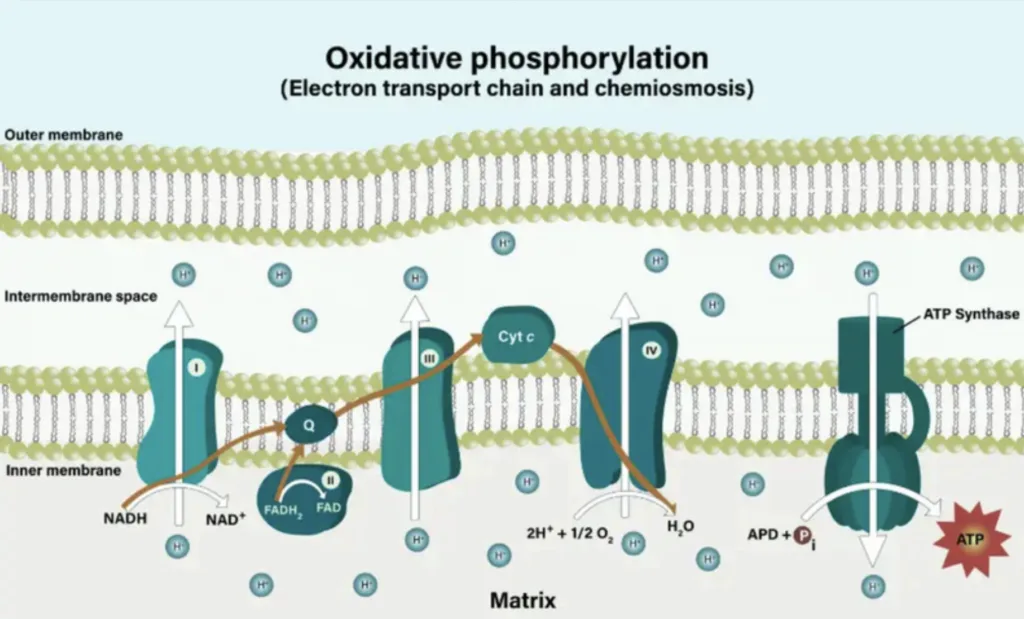
When energy production falters, cells activate AMPK, a stress sensor that halts cell growth to conserve energy. While helpful in moderation, persistent AMPK activation contributes to cellular aging. In addition, aging mitochondria tend to accumulate excess calcium, which destabilizes energy production and signals the cell to stop dividing, a process known as senescence. In normal conditions, calcium signaling helps mitochondria communicate with the nucleus, but when this regulation is lost, it contributes to cellular aging.
Mitochondrial dysfunction can trigger senescence by causing mtDNA damage, altering energy metabolism, and impairing mitochondrial quality control. However, senescent cells can, in turn, further exacerbate mitochondrial dysfunction, creating a reinforcing cycle that drives aging.
Dr. Robert Naviaux’s Model of Salugenesis
In Naviaux’s model, the hallmarks of aging reflect normal healing mechanisms that fail to turn off when no longer needed. Cells that remain stuck in these states accumulate and contribute to tissue decline and age-related disease. Mitochondrial dysfunction has been implicated in most diseases of aging, particularly neurodegenerative disorders.
Modern medicine excels at treating the causes of acute illness, yet chronic diseases are rarely cured unless their underlying trigger can be removed. In nearly every case, recovery depends on the body’s own ability to heal in the background.
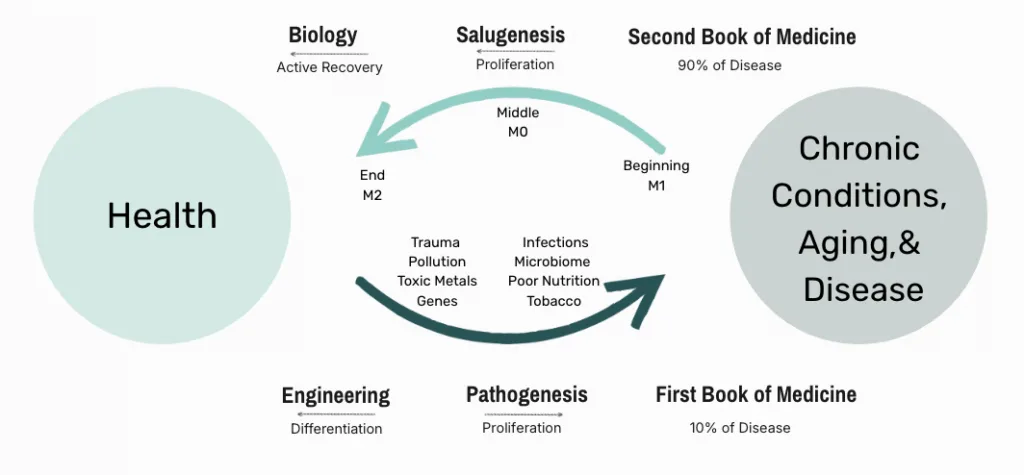
Naviaux describes this process as salugenesis, the science of healing. Just as pathogenesis explains how disease arises, salugenesis focuses on how health is restored. Most chronic illnesses fit this model, as they are not caused by an active threat but by lifelong, incomplete cycles of healing after stress or injury. To complete these cycles, mitochondria supply the energy and molecular building blocks required for repair, which is why early signs of chronic disease often involve changes in mitochondrial dynamics.
Salugenesis, the ability to heal, is an evolutionary adaptation shaped by natural selection, much like any physical adaptation. The same biological systems that govern healing also influence lifespan. In this sense, our longevity depends directly on how well our mitochondria function.
Mitochondrial Damage Impairs Hormone Production
Beyond their role in energy production and repair, mitochondria also participate in the synthesis of sex steroid hormones such as estrogen, progesterone, and testosterone.
Cholesterol is transported into the mitochondrial inner membrane, where it is converted into pregnenolone, the first step in the production of these hormones. Levels of these hormones decline naturally with aging, and can also feed into mitochondrial dysfunction.
Mitochondrial damage impairs hormone production in the gonads, while low hormone levels reduce mitochondrial efficiency and antioxidant defense. This creates yet another positive feedback loop in which mitochondrial damage and hormone decline reinforce one another, progressively accelerating tissue degeneration with age.
Lifestyle factors that Support Mitochondrial Function in Aging
Many studies have focused on the role of nutrition and metabolism as central factors in how we age.
Mitochondria are, therefore, important in aging, as well as being a crucial regulator of the body’s defense and healing response. They are dynamic organelles responsible not only for producing the energy necessary for cellular function but also for signaling when the balance within the cell has been tipped in one direction or the other.
As a result, they are particularly sensitive to various stimuli, adjusting their activity in response to diet, exercise, and environmental stress.
Role of Exercise and Nutrition in Maintaining Mitochondrial Health
Exercise, for instance, has been shown to slow aging-related changes in mitochondria, reducing intracellular danger signals, rejuvenating mitochondrial networks, and decreasing inflammation associated with aging.
Nutritional factors also play a key role in maintaining mitochondrial health.
As mentioned above, sex hormones also influence mitochondrial health. Estrogen, for instance, supports mitochondrial biogenesis and boosts antioxidant defenses. As estrogen falls in menopause it can reduce ROS signaling that enhances energy production, possibly explaining the sharp rise in age-related disorders.
Mitochondria as Sensors and Drivers of Aging
When the normal balance of mitochondria is disturbed, whether through oxidative stress, deficits in energy production, or calcium overload, cells become locked in a state of aging that contributes to tissue decline and age-related chronic diseases.
In other words, maintaining mitochondrial health may not just add years to life, it may also add life to those years.
Read / Listen Next
- Learn about the Impact of Lifestyle & Aging Mitochondria on Longevity and Wellness
- Listen to a podcast discussion on mitochondrial function and energy resilience in aging populations
- Read an article featuring a conversation with Dr. Robert Lustig on why all roads lead to metabolism
- Read an article featuring a conversation with Dr. Richard Johnson, the discoverer of the Fat Switch and its connection with mitochondria
References
- Crimmins EM. Lifespan and Healthspan: Past, Present, and Promise. Gerontologist. 2015 Dec;55(6):901-11. doi: 10.1093/geront/gnv130. Epub 2015 Nov 10. PMID: 26561272; PMCID: PMC4861644.
- Garmany A, Yamada S, Terzic A. Longevity leap: mind the healthspan gap. NPJ Regen Med. 2021 Sep 23;6(1):57. doi: 10.1038/s41536-021-00169-5. PMID: 34556664; PMCID: PMC8460831.
- Partridge L, Deelen J, Slagboom PE. Facing up to the global challenges of ageing. Nature. 2018 Sep;561(7721):45-56. doi: 10.1038/s41586-018-0457-8. Epub 2018 Sep 5. PMID: 30185958.
- Garmany A, Terzic A. Global Healthspan-Lifespan Gaps Among 183 World Health Organization Member States. JAMA Netw Open. 2024;7(12):e2450241. doi:10.1001/jamanetworkopen.2024.50241
- Naviaux, Robert. (2019). Incomplete Healing as a Cause of Aging: The Role of Mitochondria and the Cell Danger Response. Biology. 8. 27. 10.3390/biology8020027.
- Naviaux RK. Mitochondrial and metabolic features of salugenesis and the healing cycle. Mitochondrion. 2023 May;70:131-163. doi: 10.1016/j.mito.2023.04.003. Epub 2023 Apr 27. PMID: 37120082.
- Haas RH. Mitochondrial Dysfunction in Aging and Diseases of Aging. Biology (Basel). 2019 Jun 17;8(2):48. doi: 10.3390/biology8020048. PMID: 31213034; PMCID: PMC6627182.
- Rottenberg H, Hoek JB. The path from mitochondrial ROS to aging runs through the mitochondrial permeability transition pore. Aging Cell. 2017 Oct;16(5):943-955. doi: 10.1111/acel.12650. Epub 2017 Jul 31. PMID: 28758328; PMCID: PMC5595682.
- Ziegler DV, Wiley CD, Velarde MC. Mitochondrial effectors of cellular senescence: beyond the free radical theory of aging. Aging Cell. 2015 Feb;14(1):1-7. doi: 10.1111/acel.12287. Epub 2014 Nov 14. PMID: 25399755; PMCID: PMC4310776.
- Li Y, Berliocchi L, Li Z, Rasmussen LJ. Interactions between mitochondrial dysfunction and other hallmarks of aging: Paving a path toward interventions that promote healthy old age. Aging Cell. 2024 Jan;23(1):e13942. doi: 10.1111/acel.13942. Epub 2023 Jul 27. PMID: 37497653; PMCID: PMC10776122.
- Valencak TG, Azzu V. Making heads or tails of mitochondrial membranes in longevity and aging: a role for comparative studies. Longev Healthspan. 2014 Mar 3;3(1):3. doi: 10.1186/2046-2395-3-3. PMID: 24588808; PMCID: PMC3996024.
- Velarde MC. Mitochondrial and sex steroid hormone crosstalk during aging. Longev Healthspan. 2014 Feb 5;3(1):2. doi: 10.1186/2046-2395-3-2. PMID: 24495597; PMCID: PMC3922316.