
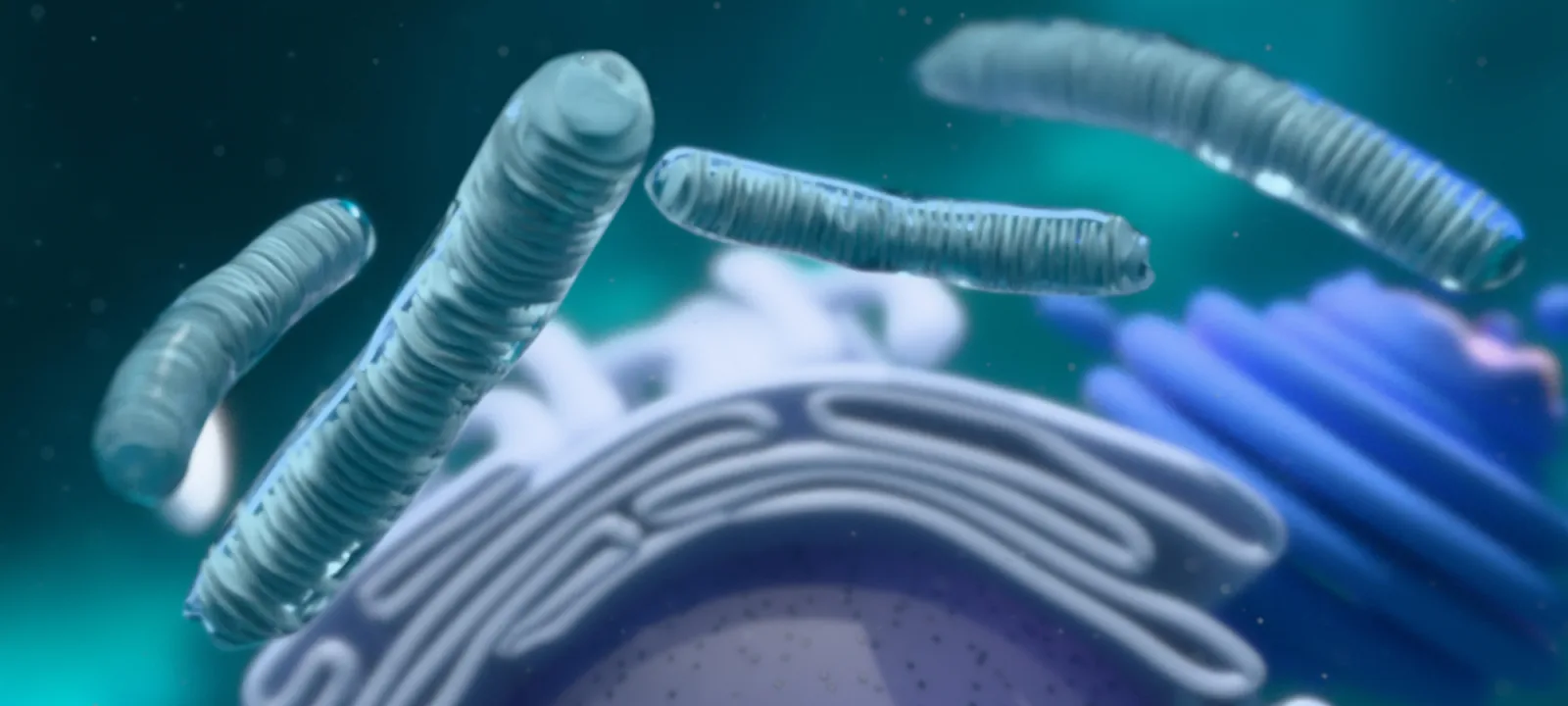
Mitochondria, Mothers, and Children: The Molecular Engine Behind Upstream Medicine
The science changing the narrative with Dr. Sundeep Dugar, Dr. M's Women and Children First Podcast
There is a particular kind of scientific mind that refuses to accept a discrepancy as noise. Most researchers, confronted with data that does not match their hypothesis, look for the error. Dr. Sundeep Dugar looks for the question.
It is a habit that has defined four decades of pharmaceutical discovery and produced more than 140 patents. It has also produced something rarer: a scientist who consistently stops mid-conversation to make sure credit goes to the team rather than the individual. He says it not as a formality but as a statement of how science actually moves.
The first thread: the lesson of the discrepancy
His first project as a drug discovery chemist at Schering-Plough began with a simple instruction: equip a lab and find a drug. The era was statins. The entire industry was focused on inhibiting cholesterol synthesis inside the body. Nobody was looking at cholesterol arriving from food through the gut.
The discovery of ezetimibe aka Zetia, still the only approved cholesterol absorption inhibitor in the world after more than 30 years, did not come from a brilliant hypothesis. It came from a discrepancy. The compound was not hitting the target it was designed to hit, yet the animals were showing exactly the cholesterol reduction the team wanted. They asked a different question: if it is not working the way we thought, what is it actually doing?
The answer was intestinal absorption. The discrepancy pointed there, and the team followed it. That instinct, trusting the observation over the hypothesis, is the first thread. It runs through everything that follows.
The second thread: a pilot study and a molecule nobody had named
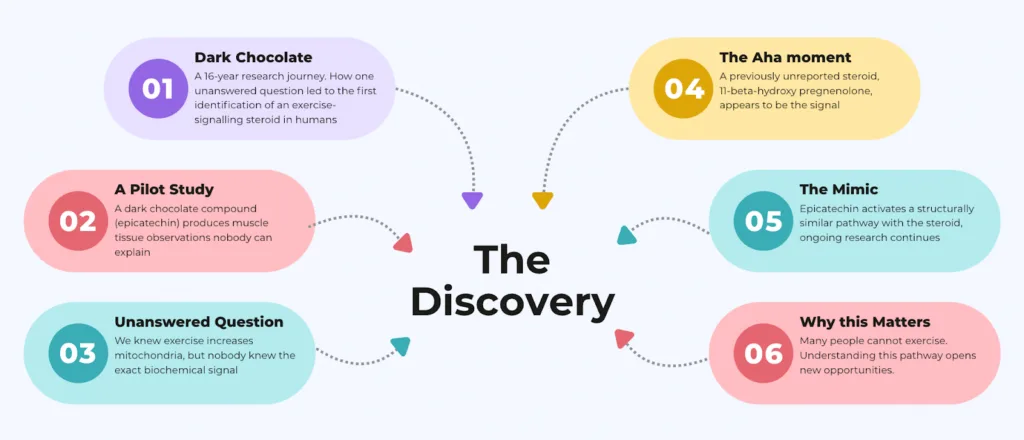
In 2009, data arrived from a small UC San Diego pilot study examining epicatechin, a compound in dark chocolate, with five patients exhibiting both serious heart failure and type 2 diabetes. After three months of epicatechin-enriched cocoa, skeletal muscle biopsies looked different. Cristae, the internal compartments of mitochondria essential for energy production, had recovered. Sarcomere structure that had resembled someone decades older looked like the muscle of a person in their forties.
The assumption was that it was an antioxidant effect. Working with collaborator Dr. George Schreiner, the team disagreed. The dose was too low for that explanation. Looking at epicatechin’s chemical architecture, they noticed a structural feature that also appears in steroids. Mitochondria perform the first and last steps of steroidogenesis. Dr. Dugar drew out a structure: a steroid the mitochondrial enzymes could synthesise if they ran only those two steps. He searched PubMed. Nothing. Zero results for a molecule the human body appeared to produce in response to every exercise session it had ever experienced.
So, he made it himself.
The Discovery at the Center of This Episode
The molecule is 11-beta-hydroxy pregnenolone. In assays it showed potency for triggering mitochondrial biogenesis approximately ten thousand times greater than epicatechin. The team found it in animal models, in isolated mitochondria, and in humans. Levels rose in blood within fifteen minutes of exercise and cleared within forty-five. It is conserved across species and was first identified and reported in humans by this team.
The pathway is now published. Exercise generates reactive oxygen species, which produce hydrogen peroxide, which activates two cytochrome enzymes in the mitochondria, which synthesize the steroid, which signals the nucleus to make more mitochondria. Epicatechin activates the same downstream pathway through structural mimicry, bypassing the need for exercise to start the chain.
“Your body has an inherent capacity to heal itself. With aging or chronic disease, it starts to lose that capacity. All we are doing is replenishing the resource.” ~ Dr. Sundeep Dugar
There is something worth sitting with here. The molecule at the center of Dr. Dugar’s first career chapter, cholesterol, turns out to be the starting material for the system at the center of the second. Mitochondria convert cholesterol to pregnenolone, precursor to all steroid hormones. The compound that one career was built around blocking is the beginning of the pathway the next chapter spent unlocking. He mentions it with quiet wonder.
The pathway also operates under hormetic control, a bell-shaped curve where too little produces no effect and too much triggers self-limitation. Mitochondria have a roughly 28-day half-life, meaning the body runs a continuous replacement program whether prompted by exercise or not.
The decision

Where the science lands for families
When Dr. M sat with this science as a pediatric integrative clinician, the connections were immediate. The biology of cellular energy is not abstract when you are sitting across from a child who cannot exercise or a mother who has been told her exhaustion is inevitable. Practitioners and caregivers asking the same upstream questions will find the same threads running through this conversation.
The published research is available in full at blueoaknx.com/science/research. Read the science and bring the questions to your clinician.
The full conversation is available now on Dr. M’s Women and Children First podcast.
Listen to the full episode now
